Sourcing guides
How Indian Handicraft Makers Can Start Exporting?
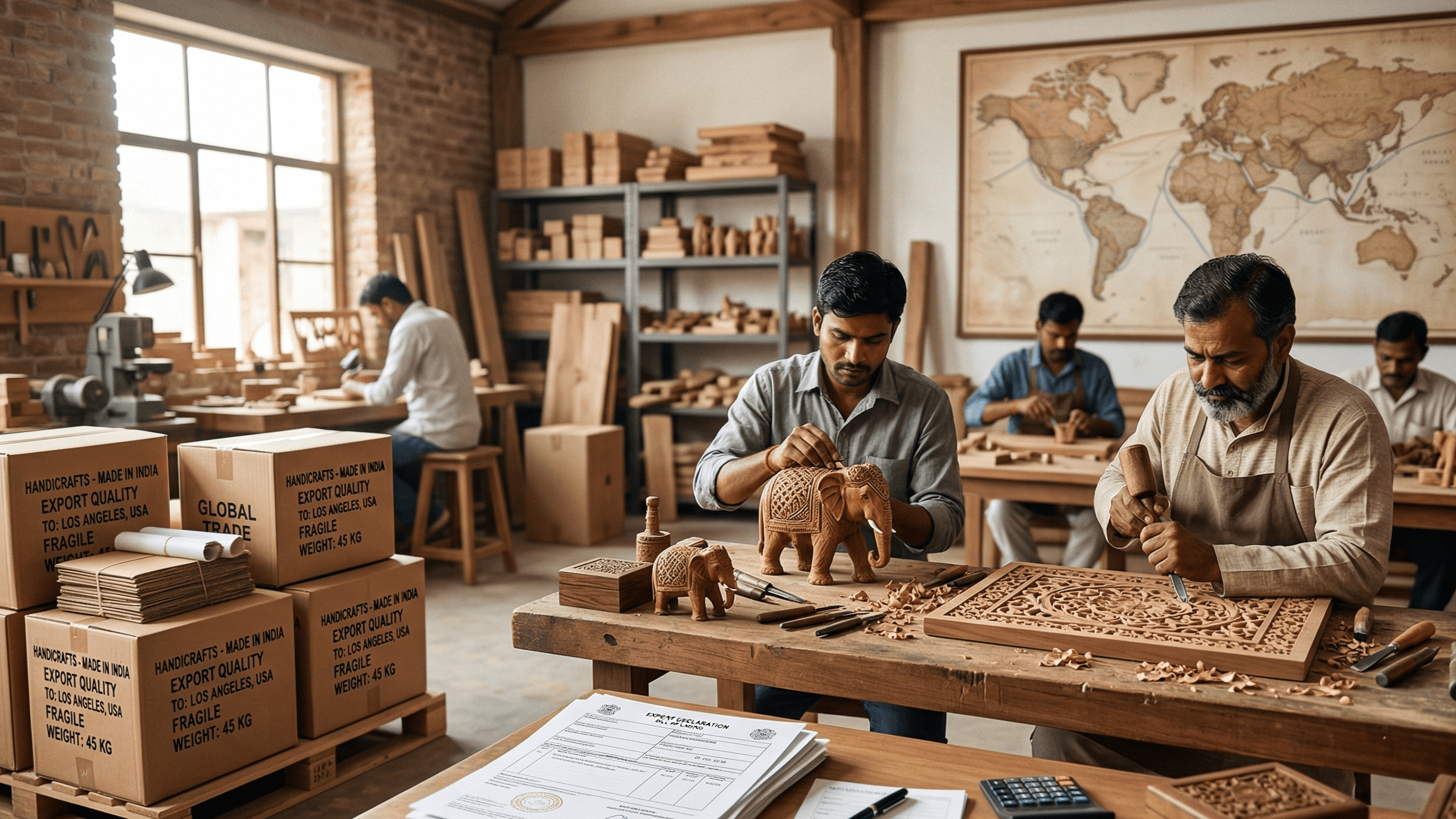
India's handicraft sector is one of the country's most celebrated industries — combining centuries of artisan skill with a vast product range that global buyers actively seek out. Yet a large number of talented Indian handicraft manufacturers have never exported a single piece.
The reasons vary — uncertainty about where to start, fear of regulatory complexity, lack of international contacts, or simply not knowing how to price products for international markets.
This guide is for you. Here is a clear, practical roadmap for how Indian handicraft manufacturers can start exporting and reach international buyers in 2026.
Step 1: Get Your Business Export-Ready
Before approaching any international buyer, make sure your business has the basic export infrastructure in place:
1. Register with DGFT (Directorate General of Foreign Trade) to get your IEC — the basic licence required for all exports from India. The process is straightforward and can be completed online: IEC (Importer Exporter Code)
2. Ensure your business is GST-registered. Exports are zero-rated under GST, but you need to be registered to claim refunds on input tax credit: GST Registration
3. Open a current account with a bank authorised for foreign exchange transactions: Current Account with Export Facility
4. MSME registration gives you access to government export promotion schemes, subsidised certification costs, and priority sector lending: MSME Registration (if applicable)
These are the non-negotiables. Without them, you cannot legally receive international payments or comply with export documentation requirements.
Step 2: Define Your Export Product Range
Not everything in your domestic product range will work for international markets. Before approaching buyers, carefully curate your export collection based on:
• Products with strong international demand (check global trend reports from platforms like WGSN, Trendalytics, or simply browse major international home décor retailers)
• Products where your craftsmanship gives you a clear competitive advantage
• Products that can be priced competitively at international retail margins
• Products that can be packaged and shipped without excessive breakage risk
Your export collection does not need to be large. Starting with 20 to 40 well-documented, well-photographed products is more effective than presenting a catalogue of 200 items with inconsistent quality and documentation.
Step 3: Price Your Products Correctly for Export
Pricing for export is fundamentally different from domestic pricing. You need to understand and build in:
• Ex-Works (EXW) price — your base factory cost including materials, labour, overheads, and margin
• Domestic freight to port
• Export packaging costs (international shipping requires stronger, more protective packaging than domestic)
• Customs clearance and documentation costs
• Sea freight or air freight charges
• Your buyer's import duties and local distribution costs
Most Indian handicraft exporters price on FOB (Free on Board) terms — meaning you are responsible for delivering goods to the Indian port, and the buyer takes responsibility from there. Understand your FOB price clearly before entering any negotiation.
A common mistake is pricing too low to win the first order and then discovering the price is unsustainable. Do your cost calculations properly from the start.
Step 4: Get Your Products Professionally Photographed
This cannot be overstated. International buyers cannot visit your factory. They make purchase decisions based on images.
Professional product photography requires:
• Clean, neutral backgrounds (white or light grey)
• Multiple angles for each product
• Close-up detail shots showing craftsmanship
• Scale references so buyers understand actual dimensions
• Lifestyle shots where relevant (products styled in a room setting)
Good photography communicates the quality and craftsmanship that justifies your price point. It is one of the highest-return investments you can make as an exporter.
Step 5: Create a Professional Digital Presence
International buyers will Google you before placing an order. If they cannot find you online, or if your online presence looks unprofessional, many will simply move on.
At minimum, you need:
• A professional website with your product range, company history, production capabilities, and contact details
• A presence on LinkedIn — increasingly used by international procurement managers
• Listings on relevant B2B platforms such as IndiaMART, ExportersIndia, or global platforms like Faire or Handshake for craft-focused buyers
Your website does not need to be elaborate. It needs to be professional, easy to navigate, and clearly communicate who you are, what you make, and how to contact you.
Step 6: Understand and Pursue Required Certifications
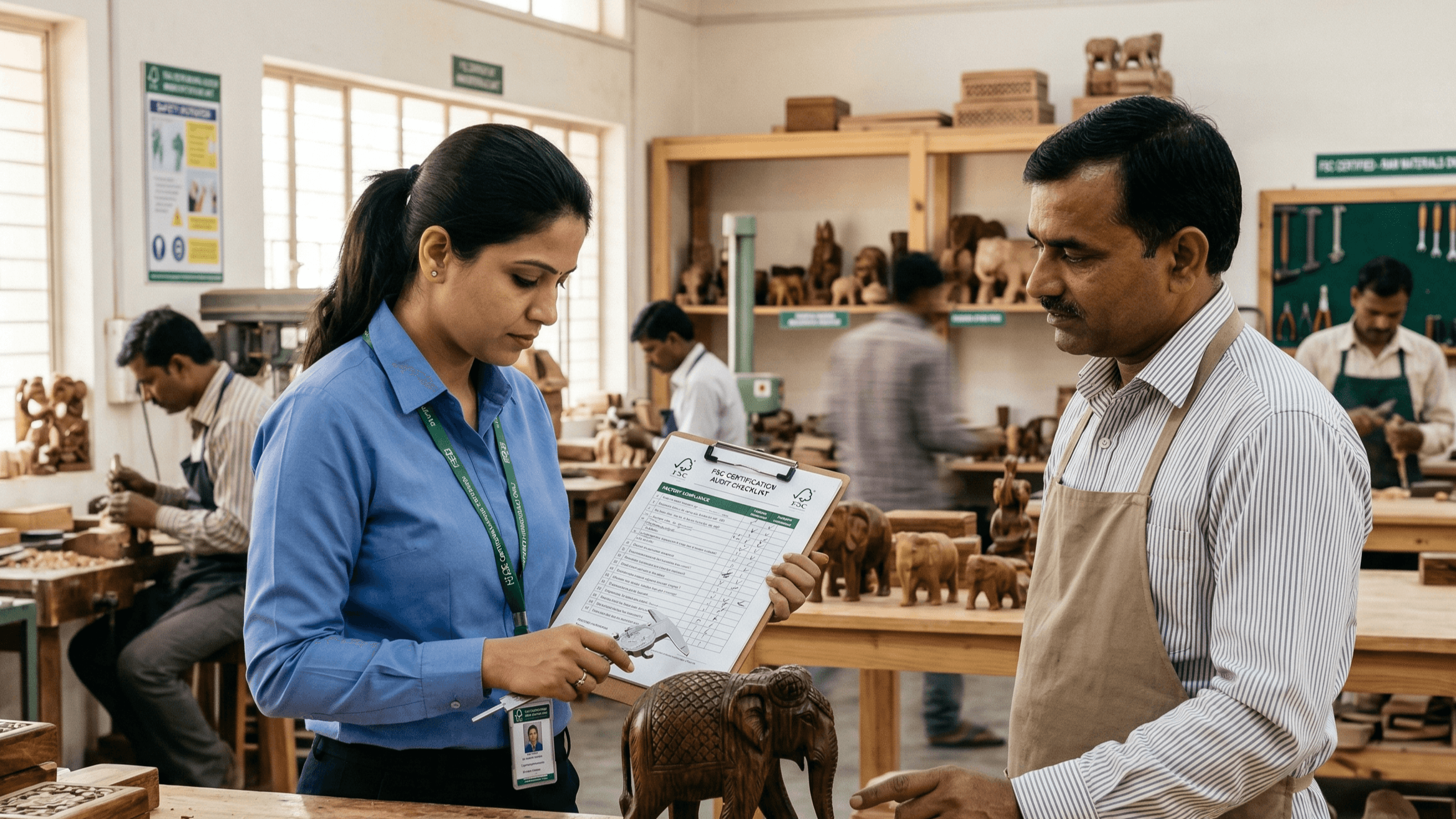
If your target markets include the EU, UK, USA, or Australia, you will encounter certification requirements sooner rather than later. The two most important for Indian handicraft exporters are:
• Required for wood-based handicraft exports to EU and UK buyers, particularly under the EU Deforestation Regulation (EUDR): FSC Chain of Custody
• Required by many mid-to-large international retailers as proof of ethical supply chain practices: SEDEX/SMETA
Starting the certification process early — even before you have confirmed your first international order — puts you in a much stronger position when buyers ask the inevitable compliance questions.
Step 7: Find and Approach International Buyers
There are several effective channels for Indian handicraft exporters to find international buyers:
• Ambiente (Frankfurt), Maison & Objet (Paris), NY NOW (New York), Canton Fair — these are where serious international buyers actively seek new suppliers. EPCH (Export Promotion Council for Handicrafts) regularly participates in and organises Indian pavilions at these fairs: International trade fairs
• The Export Promotion Council for Handicrafts regularly organises buyer-seller meets and trade delegations that give Indian exporters direct access to international buyers: EPCH buyer-seller meets
• Held annually in Delhi, this is one of the largest sourcing events for international buyers seeking Indian handicrafts: India International Handicraft Fair (IIHF)
• Working with a sourcing consultant who has established relationships with international buyers can significantly accelerate your buyer acquisition, especially for exporters who are new to international markets: Sourcing consultants
• A well-maintained LinkedIn presence and professional email outreach to international buyers and retailers in your target product categories: Digital outreach
Step 8: Handle Your First Order With Maximum Care
Your first international order is your most important. How you handle it determines whether you get a repeat order, a referral, and the start of a genuine long-term relationship.
For your first order:
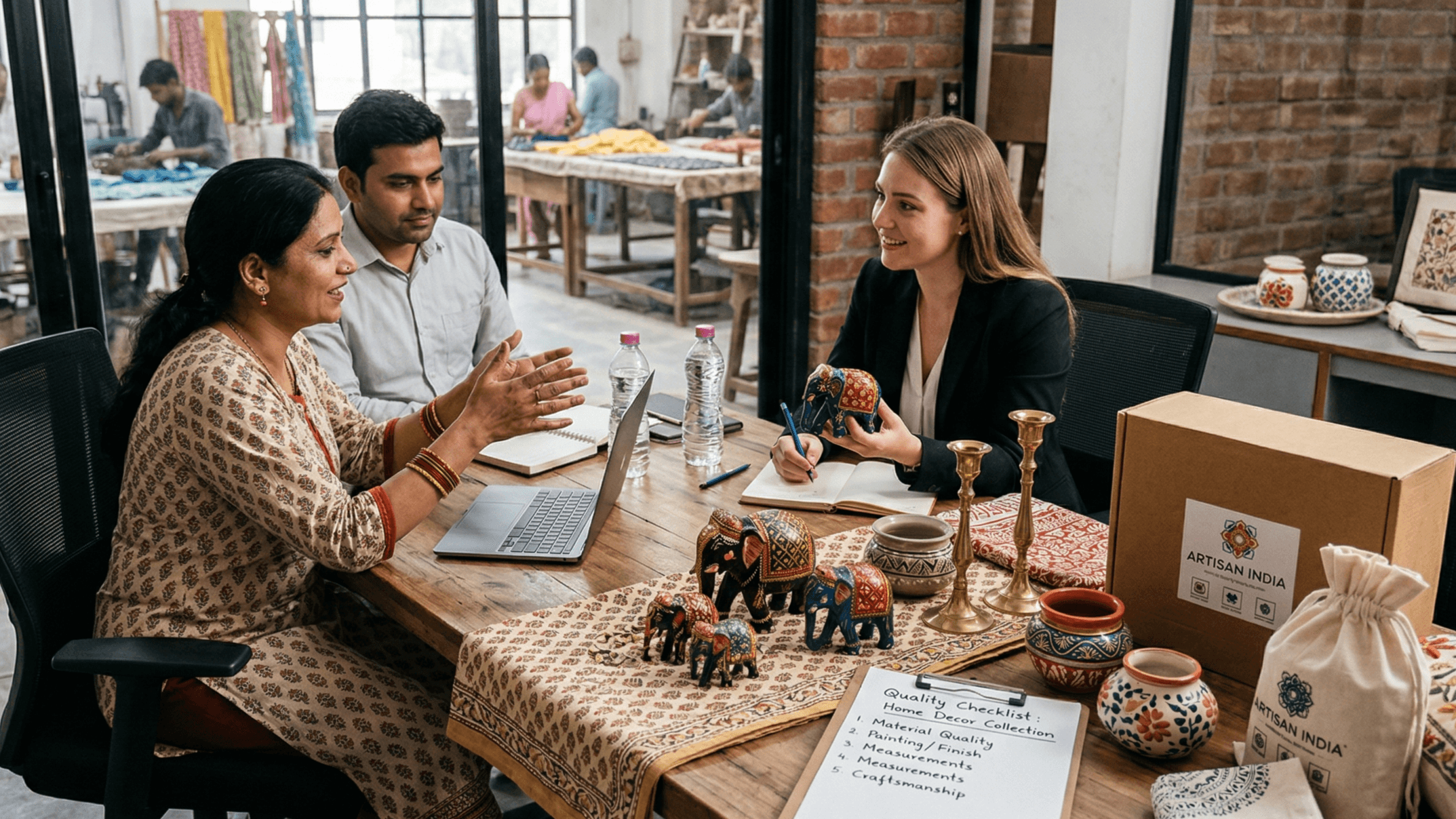
• Confirm every specification in writing before production begins
• Conduct a thorough quality check before packing
• Pack with international shipping standards — protect against transit damage
• Provide complete, accurate export documentation
• Communicate proactively throughout production and shipping
• Follow up after delivery to confirm the buyer is satisfied
First orders are won on price and product. Long-term relationships are built on reliability, consistency, and communication.
A Note on Patience and Persistence
Building an international export business takes time. Most successful Indian handicraft exporters spent 12 to 24 months developing their first stable roster of international buyers. The exporters who succeed are those who invest in the right foundations — certifications, photography, pricing, quality systems — and then approach international buyer development with patience and professionalism.
The global demand for authentic Indian handicrafts is real and growing. The opportunity is there. The question is whether your business is prepared to capture it.
Rainbow Sourcing & Consulting Services helps Indian handicraft manufacturers become export-ready — from compliance certifications to buyer introductions to ongoing trade support. If you are ready to start your export journey, visit rainbowsourcingservices.co.in and book a free consultation with our team.